
Where Does The Heart's Electrical Impulse Start

Ever wondered what's going on under your shirt when you're feeling all warm and fuzzy? Or when you're pumping iron at the gym, and your heart's going like a drum? Well, buckle up, because we're about to dive into the fascinating world of your heart's electrical system. It's like your body's own DJ, spinning beats that keep you grooving through life.
So, where does this magical musicality begin? Let's rewind to the moment you were just a tiny, beating blob. Even then, your heart was already rocking out its own rhythm. The first beat of your heart's electrical symphony starts in a tiny area called the sinoatrial node, or SA node for short. It's like the conductor's baton, setting the pace for the entire orchestra.
Meet the SA Node: Your Heart's Maestro
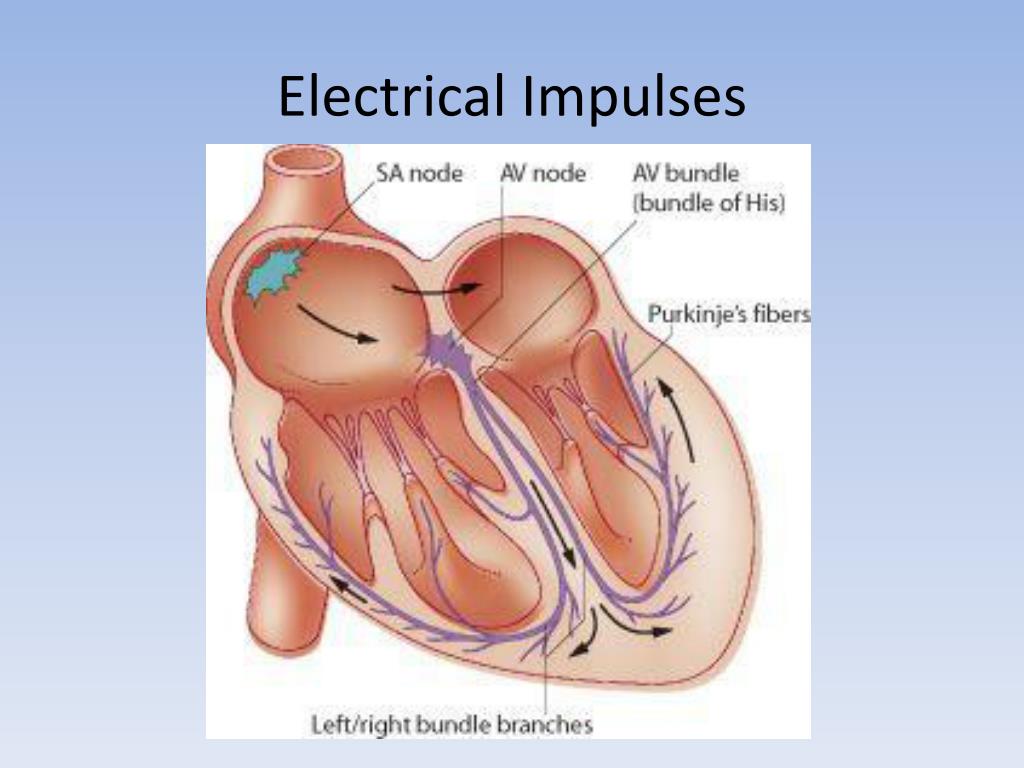
Imagine the SA node as a little cluster of cells, chilling out in the top right chamber of your heart, the right atrium. It's not much to look at, but don't let its size fool you. This tiny maestro is packing some serious power. It's the heart's natural pacemaker, generating electrical impulses that tell your heart when to beat.
Must Read
But how does it do this? Well, it's all about ions, my friend. The SA node has these tiny gates that let specific ions in and out. When the right mix of ions gets in, it triggers a wave of electricity that spreads out like ripples in a pond. This is your heart's electrical impulse, and it's about to go on one heck of a journey.
From the SA Node to the World
Once the electrical impulse leaves the SA node, it's off to the races. It zips through the heart's conduction system, a network of cells that make sure the impulse gets where it needs to go, fast. It's like a high-speed train, zooming through tunnels and over bridges, never stopping until it's reached its destination.

First stop: the atrioventricular node, or AV node. This is like the station master, making sure the impulse doesn't get lost or delayed. It slows down the impulse just a touch, giving the atria time to contract and fill with blood. Then, it's off again, racing through the bundle of His and the Purkinje fibers, until it finally reaches the ventricles.
The ventricles, being the powerhouses they are, contract with a mighty thump, sending blood shooting out to the rest of your body. And just like that, one beat is done, and the SA node is ready to start the next one. It's a never-ending symphony, playing 24/7, 365 days a year. Talk about a workhorse!
Why It's All So Cool
So, why should you care about this electrical impulse stuff? Well, for starters, it's what keeps you alive. Every beat of your heart is a testament to the incredible complexity and efficiency of your body's systems. It's like a tiny, internal metronome, ticking away the seconds of your life.
But it's also just plain cool. The fact that this electrical impulse has been going since before you were even a twinkle in your parents' eyes is mind-blowing. It's a constant, a steady beat in the symphony of life. And the best part? You don't even have to think about it. Your heart just knows what to do, beat after beat, day after day.
So, the next time you're feeling your heart pound after a good laugh or a tough workout, remember the SA node, your heart's own DJ, spinning beats that keep you grooving through life. Isn't that something worth dancing about?