
What's The Difference Between Physical And Chemical Properties

Physical vs Chemical Properties: The Tale of Two Twins
Imagine you're at a party, and you meet two twins, Phil and Chem. They're identical, but they have some striking differences. That's kinda like physical and chemical properties - they might seem similar, but they're not. Let's dive in, shall we?
Phil: The Physical Property Twin
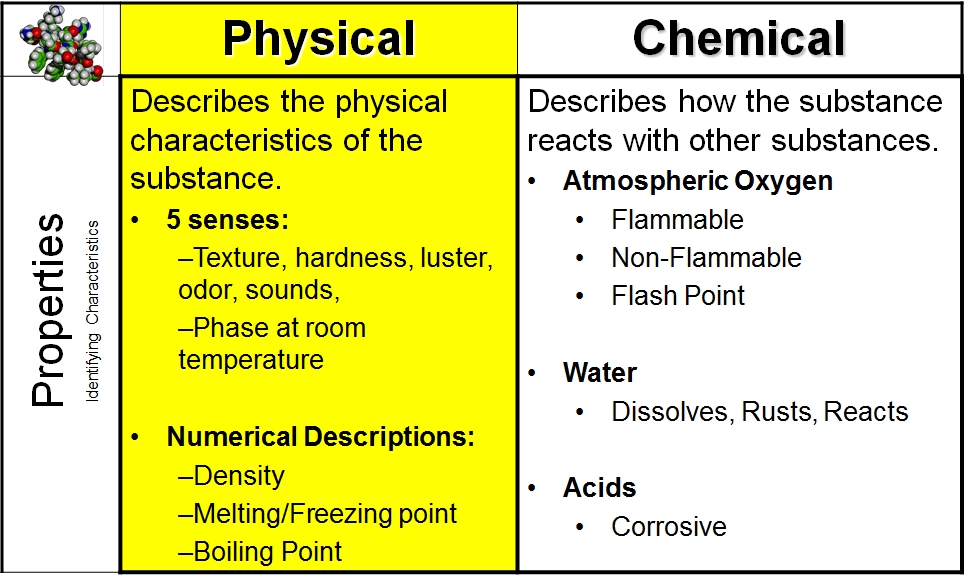
Phil is all about how things look and feel. He's the life of the party, always ready to show off his appearance and shape. He can change his state - from solid to liquid to gas, like when water turns into steam. But here's the thing, Phil can always go back to his original state. No matter what, he's still Phil. That's a physical property for you - it's all about how something looks and feels, and how it changes with temperature and pressure.
Take gold, for instance. It's shiny and yellow, that's a physical property. You can melt it, and it'll still be gold when it cools down. Or think about how water boils at 100°C at sea level. That's a physical property too. But if you take it to the top of a mountain, it'll boil at a lower temperature. That's Phil for you, always changing with the circumstances but never losing his essence.
Must Read
Chem: The Chemical Property Twin
Now, Chem is more reserved. He's all about what's happening inside, what makes him tick. He can react with other substances, changing completely into something new. He can't go back to his original state like Phil. That's a chemical property - it's all about how something reacts with other substances.

Consider sugar. It's sweet, that's a physical property. But when you burn it, it turns into carbon and water. That's a chemical property - sugar has reacted with oxygen to change completely into something else. Or take iron. It rusts when it reacts with oxygen and moisture. That's a chemical property too. Once it's rusted, you can't turn it back into iron.
Why Should You Care?
You might be thinking, "Why should I care about these property twins?" Well, understanding them can make your life easier. If you know Phil's tricks, you can predict how things will change with temperature and pressure. That's why you know to keep your chocolate in the fridge - it won't melt at room temperature, but it might get soft if it's too warm.
And knowing Chem's ways can help you understand reactions. It's why you know to keep bleach and ammonia separate - they react together to make a toxic gas. It's also why you can predict what'll happen when you mix different substances. Understanding these properties can help you in the kitchen, the lab, and even in your daily life.
Let's Wrap Up
So, there you have it. Physical properties are all about how things look, feel, and change with temperature and pressure. Chemical properties are about how things react with other substances. They're like Phil and Chem - similar, but different. And understanding them can make your life a whole lot easier. Now, go forth and impress your friends with your newfound knowledge!