
Atoms Of Different Elements Are Different

So, you're curious about atoms, huh? Let's grab a coffee and chat about 'em. You know, those tiny little guys that make up everything around us. But here's the thing, not all atoms are created equal. They're like a big, diverse family, each with its own unique personality. Let's dive in, shall we?
Meet the Atom Family
Imagine atoms as a family. You've got your grandparents - the heavyweights like Uranium and Plutonium. Then there are the middle children - your Silicons and Oxygens. And finally, the lightweights - the Hydrogen and Heliums of the world. Each has its own role to play, right?
Now, you might be thinking, "But aren't they all just tiny, indivisible particles?" Well, that's where things get interesting. Turns out, atoms are like tiny solar systems, with a nucleus at the center and electrons whizzing around them. And guess what? The nucleus is where all the action is.
Must Read
Nucleus: The Atom's Powerhouse
In the nucleus, you've got protons and neutrons. Protons are like the bouncers of the atom club - they determine what element an atom is. More protons mean a heavier element. Neutrons, on the other hand, are like the partygoers - they can vary in number, but they don't change the element's identity.
Here's where it gets fun. Different elements have different numbers of protons. Hydrogen has just one, while Uranium has a whopping 92. It's like having a family where some kids are only children, and others are part of a big, bustling brood.

Isotopes: The Atom's Cousins
Now, you might be wondering, "What about those neutrons again?" Well, remember how I said they can vary? That's where isotopes come in. Isotopes are like atom cousins - they have the same number of protons (so they're the same element), but a different number of neutrons.
Take Carbon, for instance. Most of it has 6 protons and 6 neutrons, making it 'Carbon-12'. But there's also 'Carbon-14', which has 6 protons and 8 neutrons. They're both Carbon, but they behave differently. Isn't that something?
Electrons: The Atom's Mood Ring
Alright, let's not forget about electrons. They're like the atom's mood ring - they can change their energy levels, moving between different 'shells' around the nucleus. This is what makes atoms react with each other - it's all about those electrons.
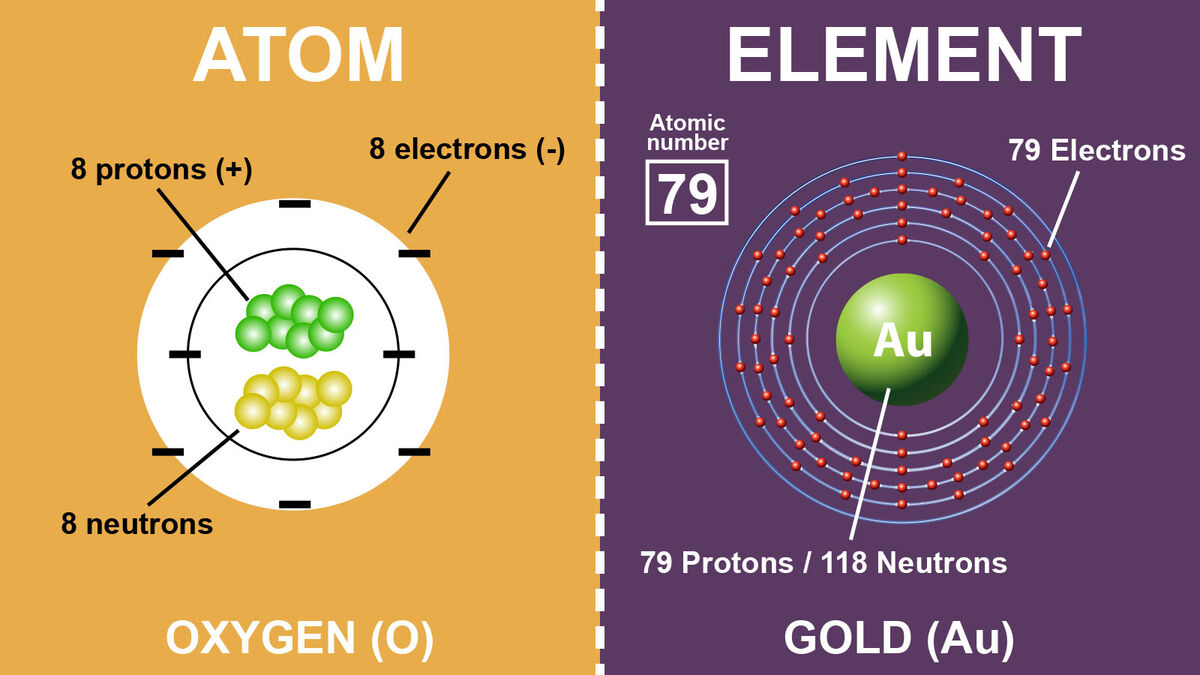
Think about it like this: electrons are like kids on a playground. They want to be with their friends (other electrons), but they can only be in so many places at once (energy levels). If they're feeling lonely (they want to be in a full shell), they might misbehave (react with other atoms).
Why Does It Matter?
So, why does all this matter? Well, understanding atoms helps us understand everything around us. It's why some elements are metals, and others are gases. It's why some react with each other, and others don't. It's the basis of chemistry, and ultimately, life as we know it.
Pretty cool, huh? I mean, we're literally made of these tiny, diverse particles. It's like we're all walking, talking atom families. So, the next time you look at a table of elements, remember, they're not just symbols on a page. They're a big, diverse family, each with its own unique story to tell.